“In Ain't That America, his latest body of work, Strydom journeys across the United States — wandering through New York, Miami, Chicago, and San Francisco — to interrogate the myths and contradictions of American identity.”
The series balances his experimental, multi-layered style with moments of restraint: pared-back, single-frame still lifes that allow light, colour, and silence to speak on their own terms. Diners, neon signs, dive bars, and overlooked corners of the city become quiet icons of 'classic Americana,' reframed with intimacy and tension.
Through this interplay between layered dynamism and contemplative stillness, Strydom captures the simultaneity of American life: spectacle and silence, chaos and order, nostalgia and reinvention.
Ain't That America is both question and exclamation — a provocation that asks us to reconsider what the image of America reveals, conceals, and performs.
Strydom offers us not America as it is, but America as it feels: dissonant yet resonant, ordinary yet mythic, fragmented yet whole. It is a vision of a place — and perhaps of ourselves — caught between stillness and motion, past and possibility.
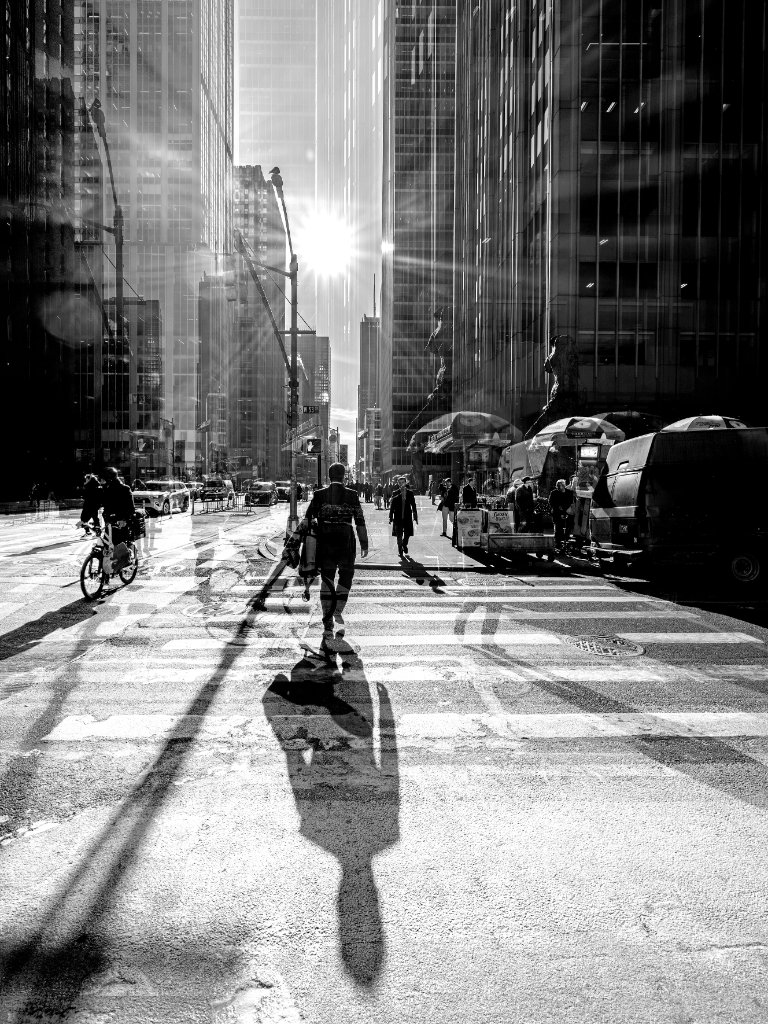
A cascade of bodies in motion across a Manhattan intersection — the city's relentless choreography distilled into a single layered frame. The compression of time, the simultaneity of lives briefly shared and instantly forgotten.
Afternoon Crossing, New York
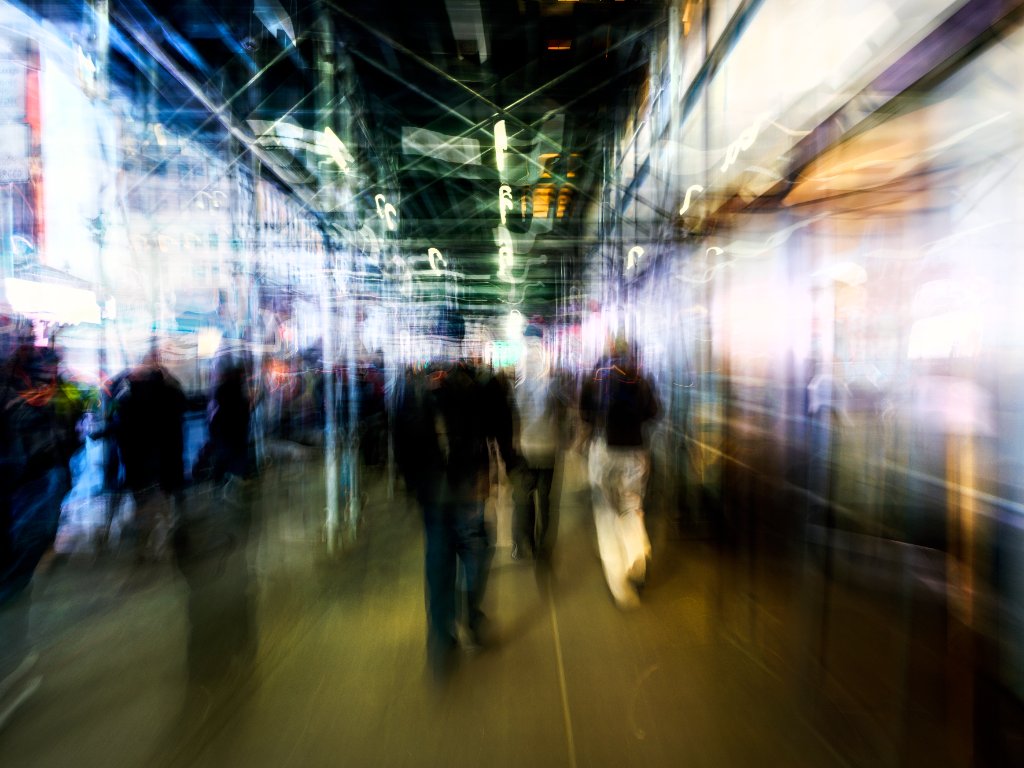
The perpetual motion of New York — figures dissolving into architecture, purpose blurring into atmosphere. To walk here is to become briefly anonymous, part of the city's unceasing current.
Walking Through, New York
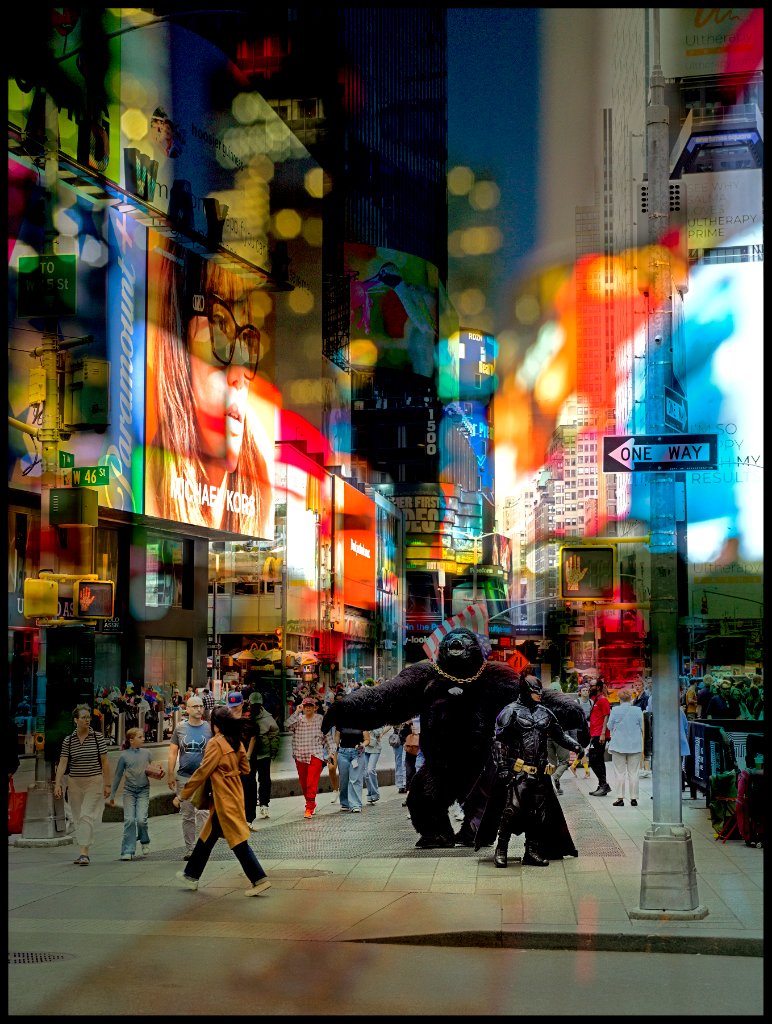
The mythic beast looms over Times Square — spectacle amplified to the point of absurdity, where fiction and reality trade places. American entertainment as monument, as dominance, as cultural export.
King Kong, Times Square
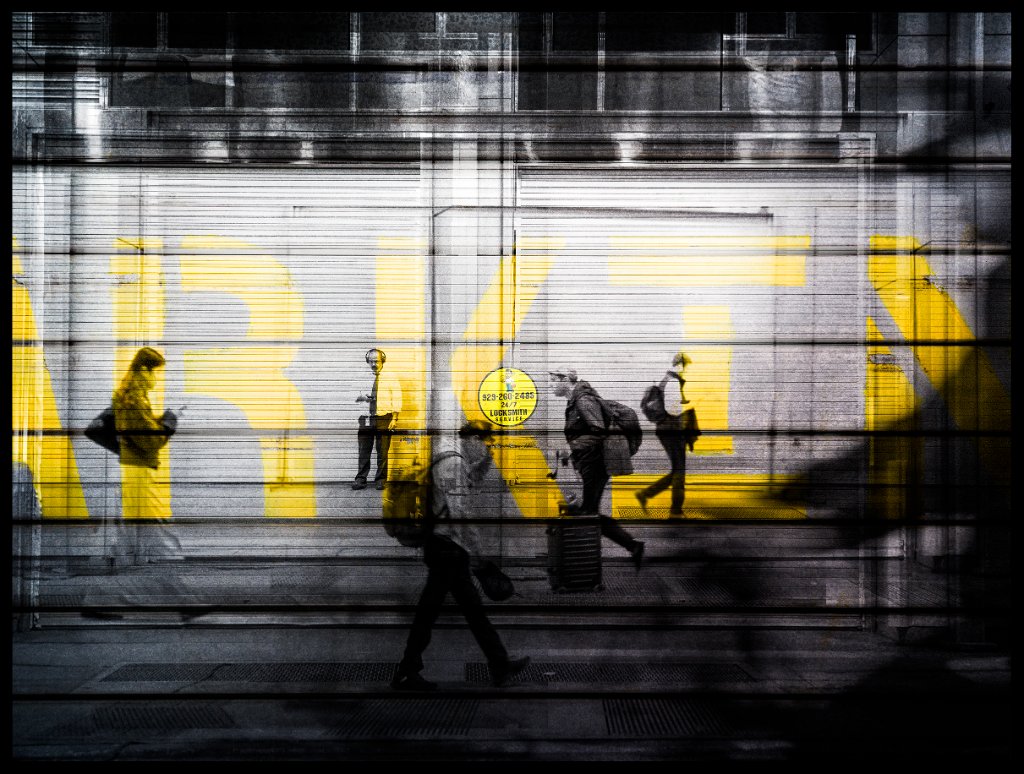
The theatre of the New York sidewalk — strangers performing adjacency, the city an endless backdrop for anonymous encounter. To walk here is to become, briefly, a character in a story with no single author.
Sidewalk, New York
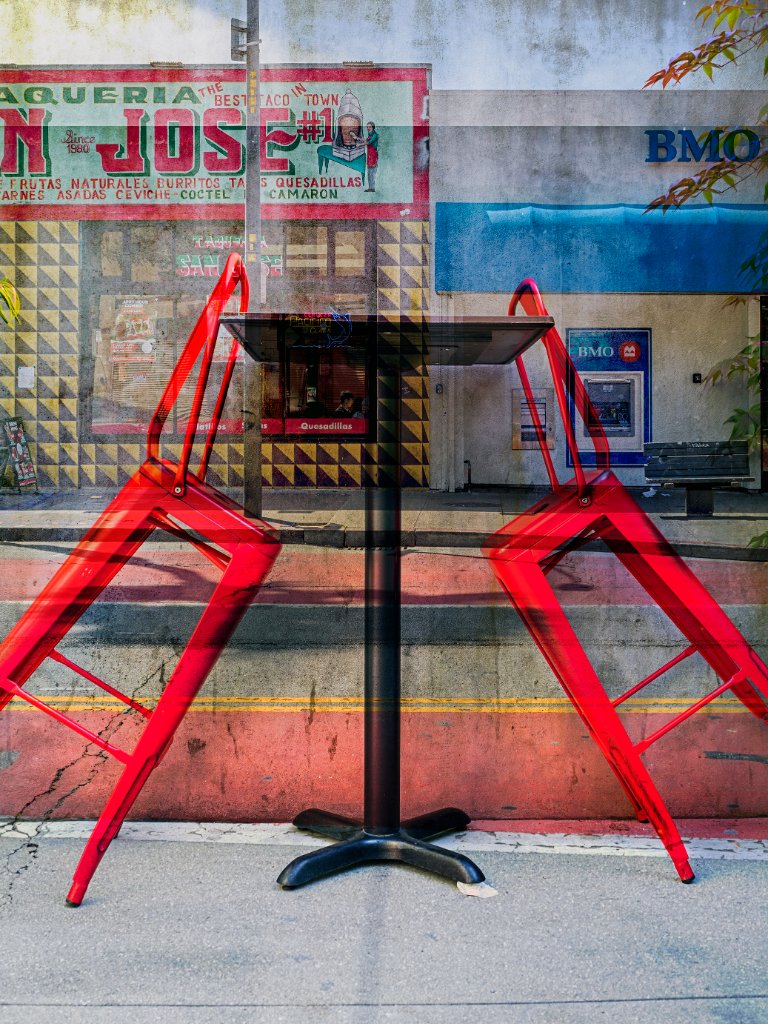
At the threshold of a taqueria on Mission Street, past and present layer over one another — a portrait of a city caught between gentrification and memory. The ordinary storefront becomes a site of cultural negotiation.
Jose #1, San Francisco
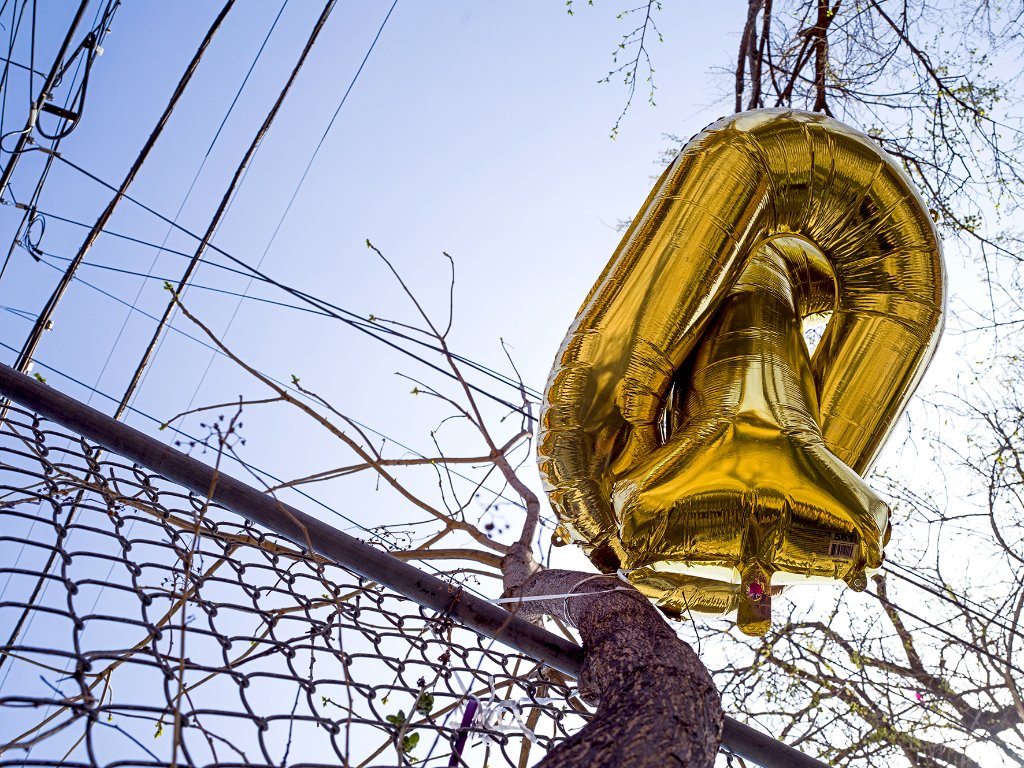
Colour as resistance. Against the grey geometry of Chicago's elevated architecture, these balloons become an act of defiant joy — the everyday object charged with unexpected power.
Balloons, Chicago
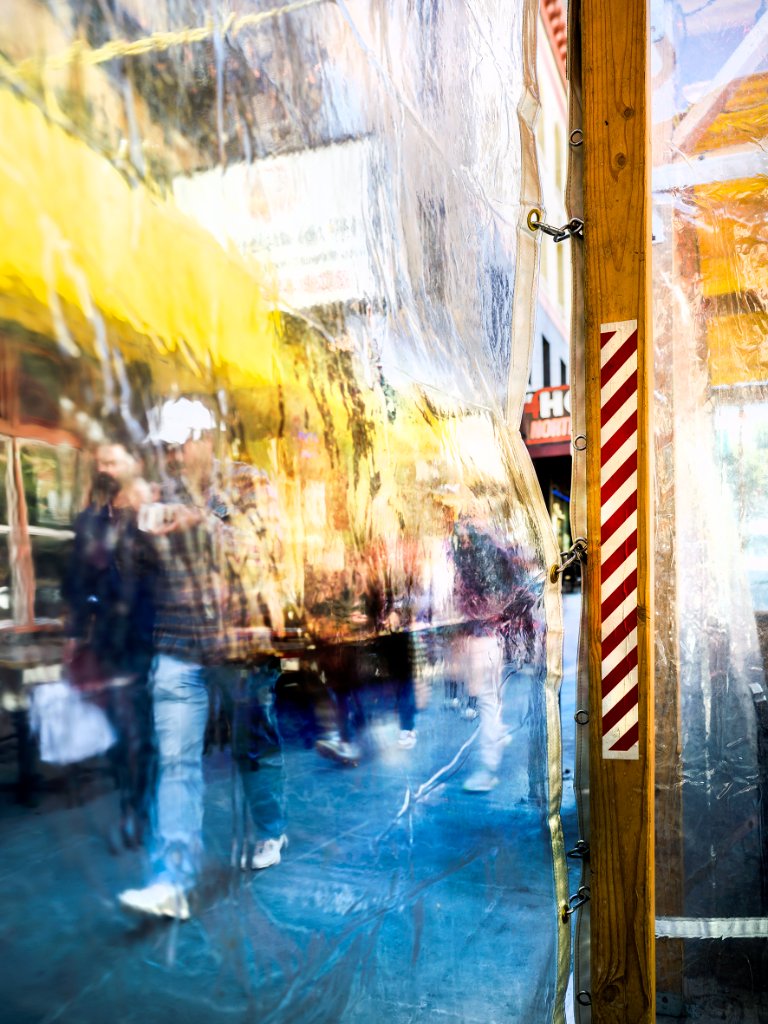
Beneath the folds of a blue tarp, the unseen city breathes. This is the America that does not appear in postcards — present, insistent, and quietly poetic.
Tarp, San Francisco
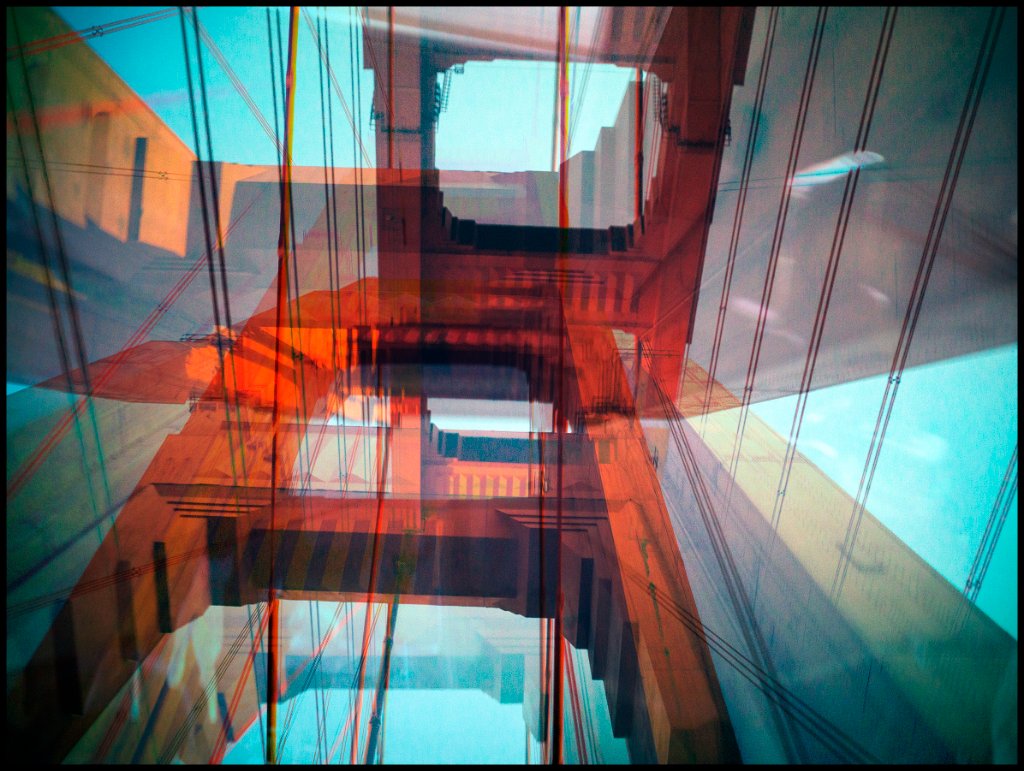
Icon reframed. Strydom finds the mythic bridge not as landmark but as atmosphere — mist, steel and light collapsing into abstraction. The monument dissolves into feeling.
Golden Gate, San Francisco
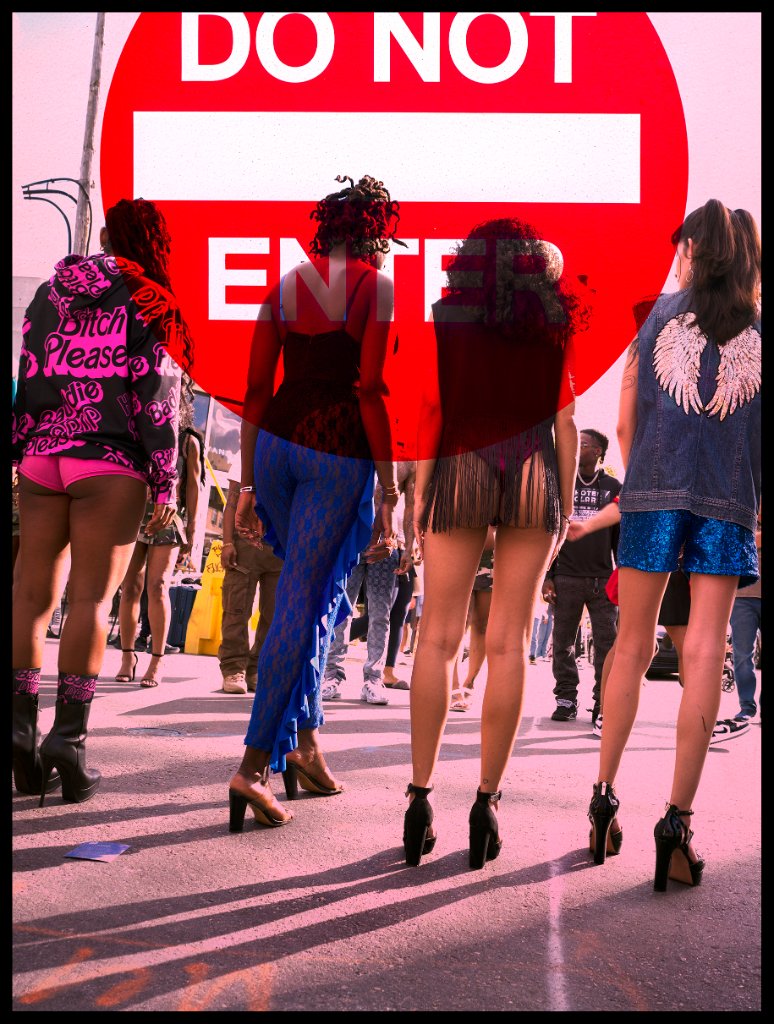
The unity of a march versus controlled signage — order against defiance. Authority performs its language in red and white while the street pushes back.
Do Not, Miami
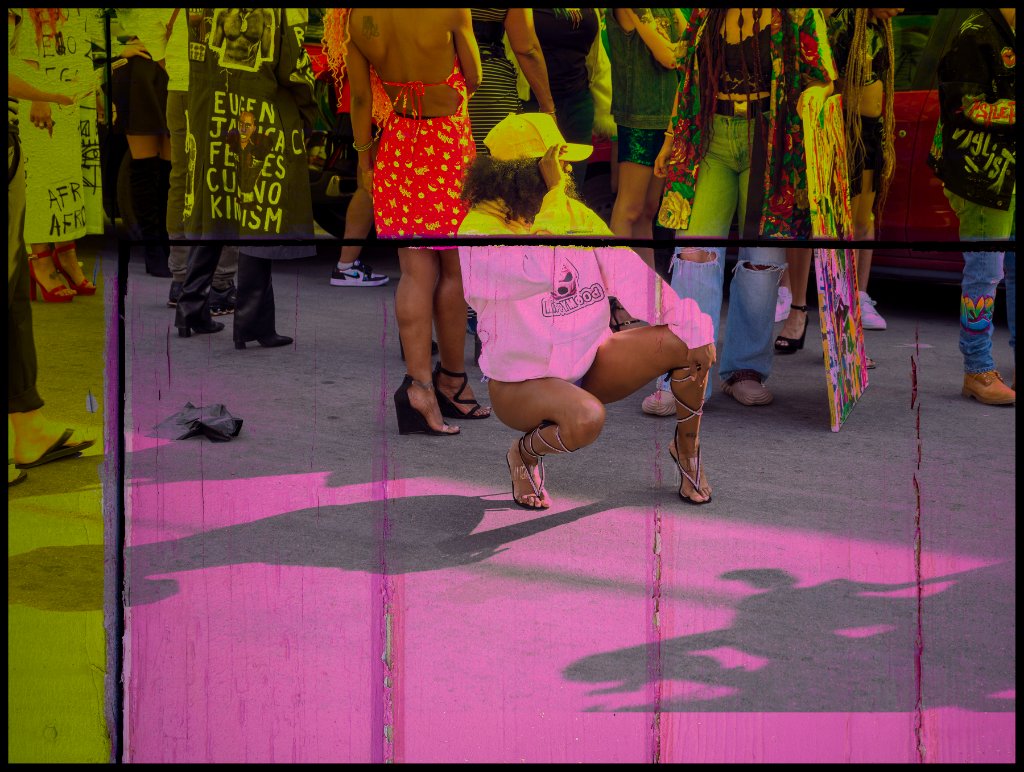
At ground level, Miami reveals a different geometry — the city stripped of its glamour, reduced to shadow, concrete, and the quiet endurance of those who inhabit its edges.
Down Low, Miami
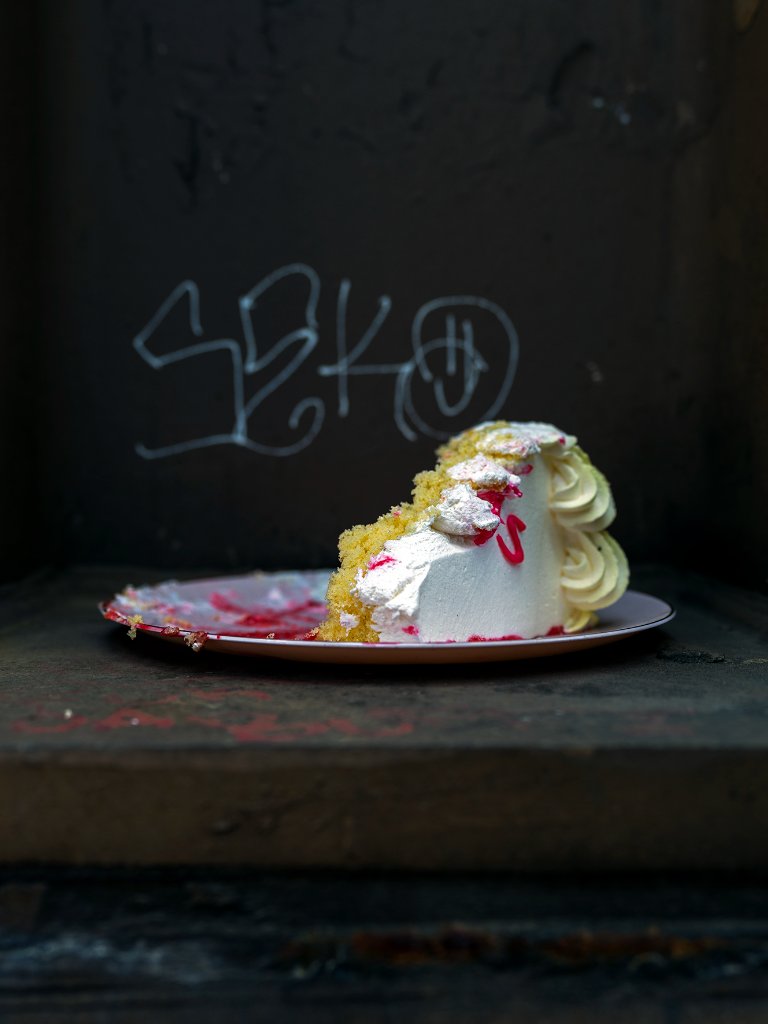
Still life as cultural artefact. The cake in the diner window — sweet, theatrical, American — becomes a meditation on abundance and the performance of joy. The sugar-pink frosting holds the weight of an entire mythology.
Cake, Chicago
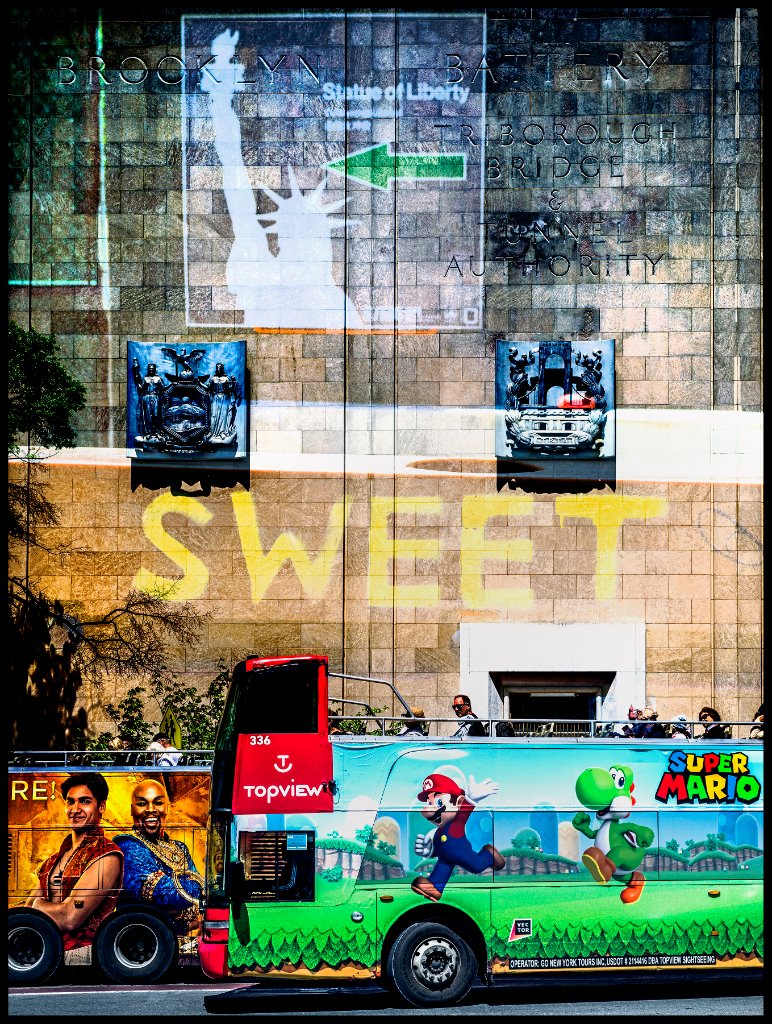
A confectionery window on the edge of midtown — desire made visible, sugar-coated and lit for maximum seduction. America's talent for turning the ordinary into spectacle.
Sweet, New York
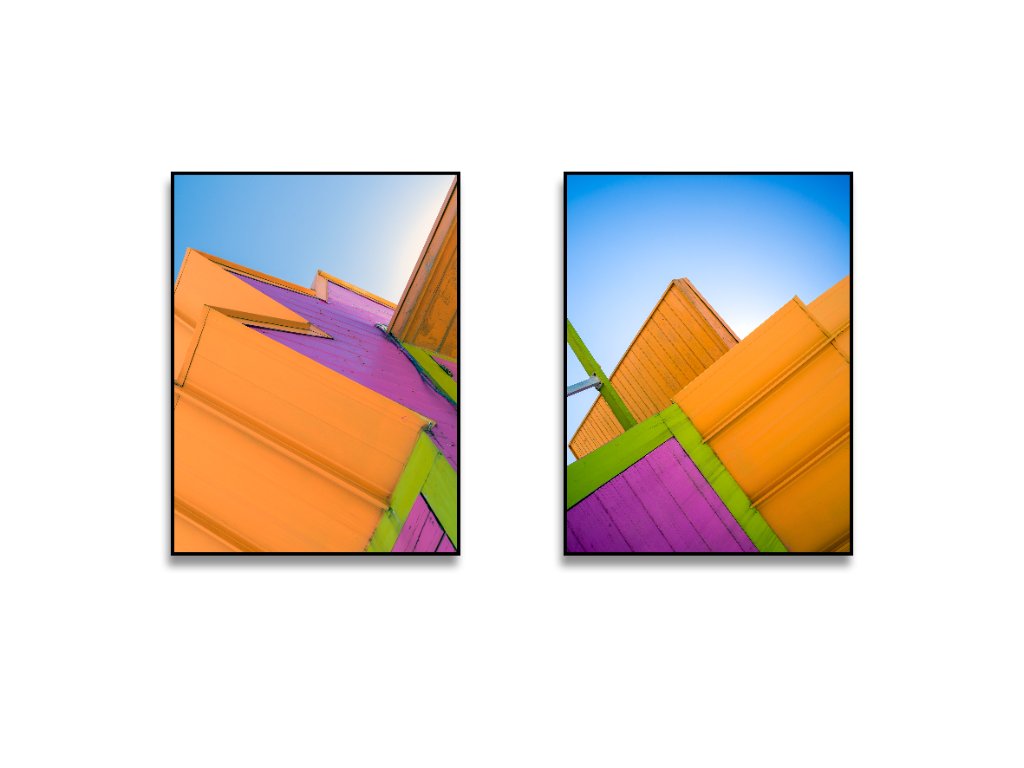
Miami's iconic pastel towers stand sentinel over the shore — geometry and colour as pure form, the beach as stage. These structures, familiar to the point of invisibility, suddenly demand attention.
Lifeguard Tower 1 & 2, Miami
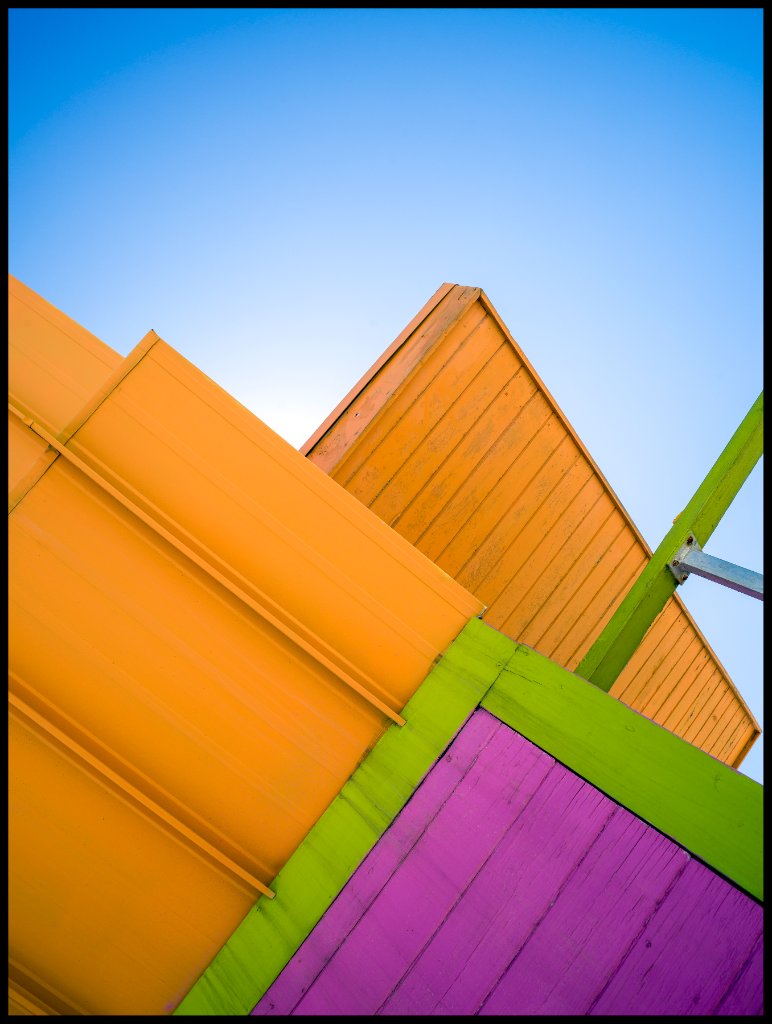
Alone on the sand, the tower holds its post — pastel geometry against the flat Miami light. An emblem of vigilance, of readiness, of the shore as threshold between safety and open water.
Lifeguard Tower 1, Miami
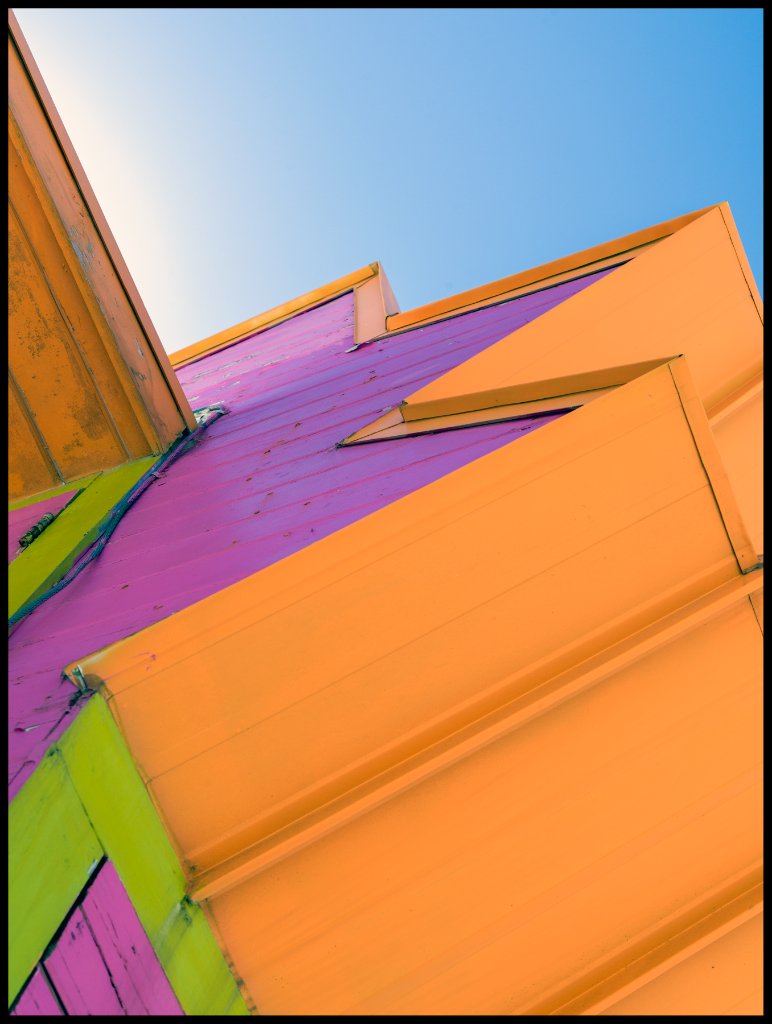
The second tower — a variant of the same motif, differently lit. Together the pair form a meditation on repetition and variation, on how the same structure reads differently against a changing sky.
Lifeguard Tower 2, Miami
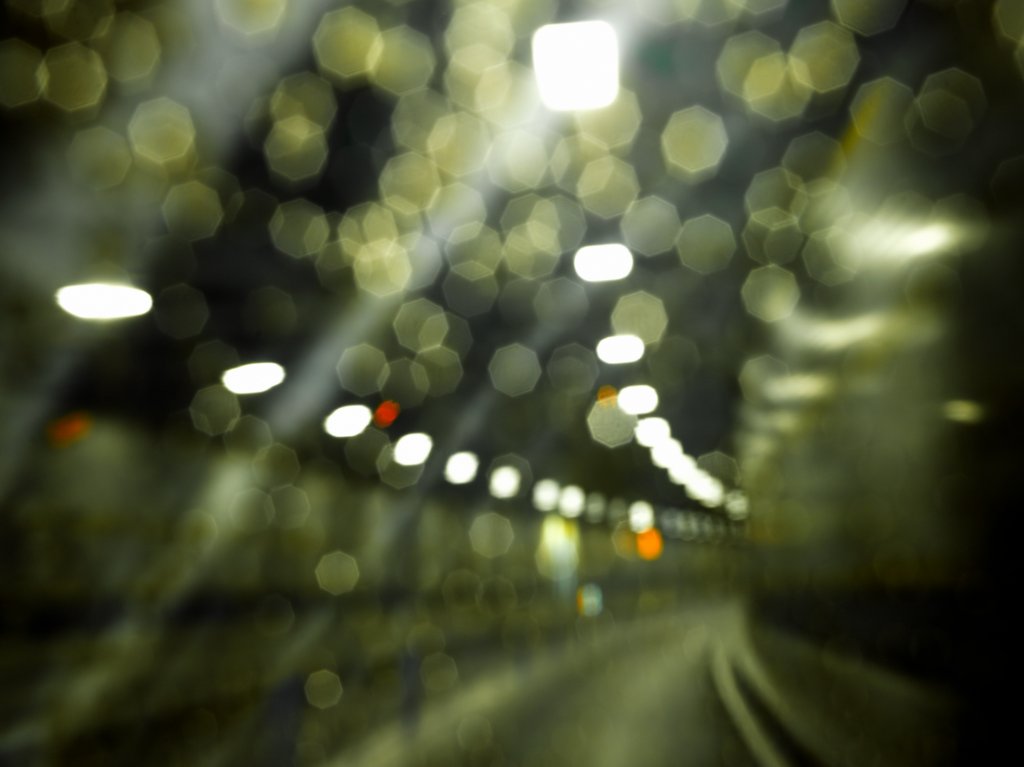
The city swallows and releases. At the mouth of the tunnel, light and shadow negotiate the boundary between presence and disappearance — entry and exit as existential condition.
Tunnel, San Francisco
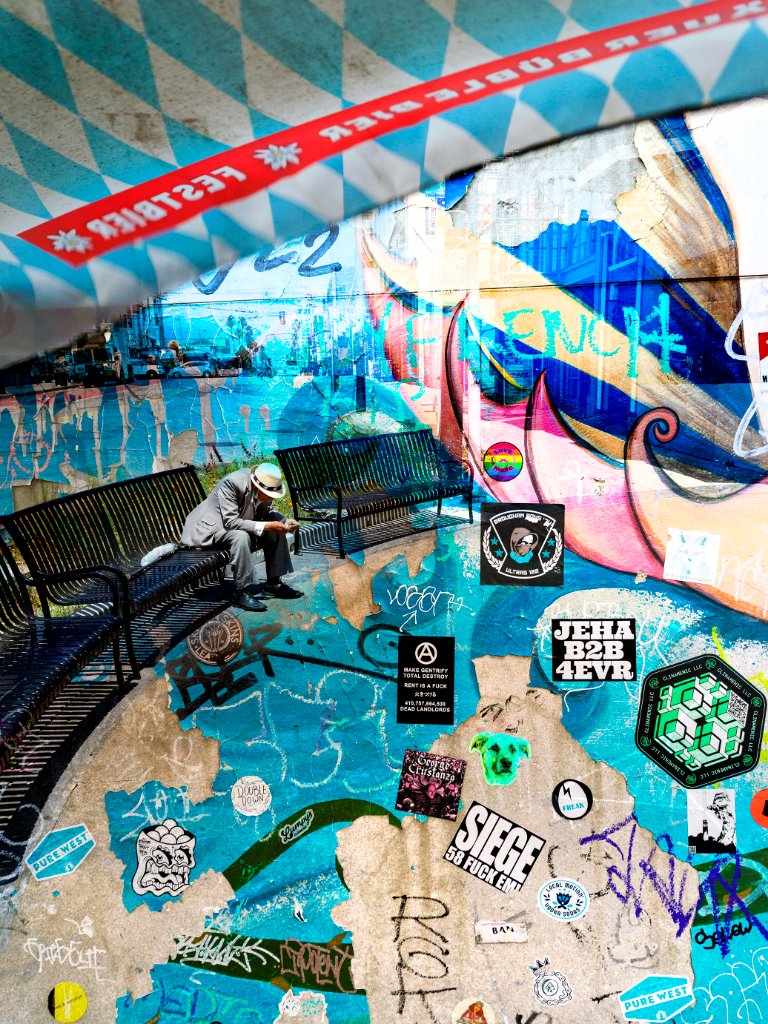
A figure at rest amid the city's flow — stillness as a radical act. San Francisco's streets frame the quiet dignity of pause, of taking up space, of simply being present without purpose or performance.
Benched, San Francisco
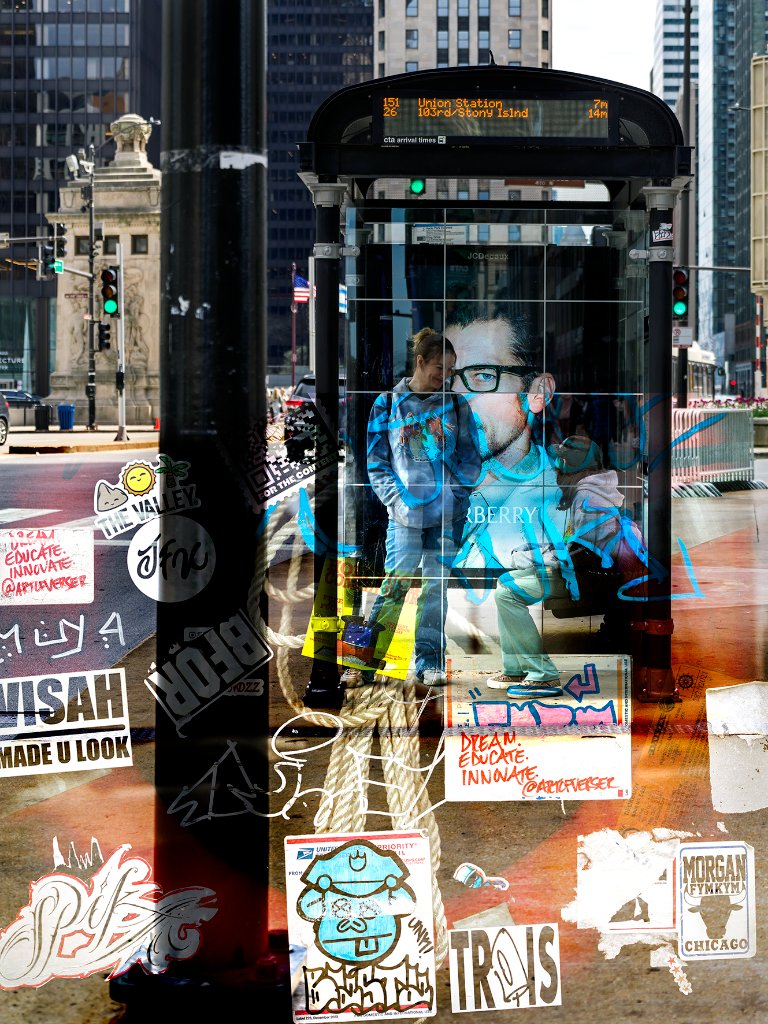
The democratic pause — strangers held together by waiting, the bus stop as temporary commons. Chicago's elevated infrastructure looms overhead while life continues at street level.
Bus Stop, Chicago
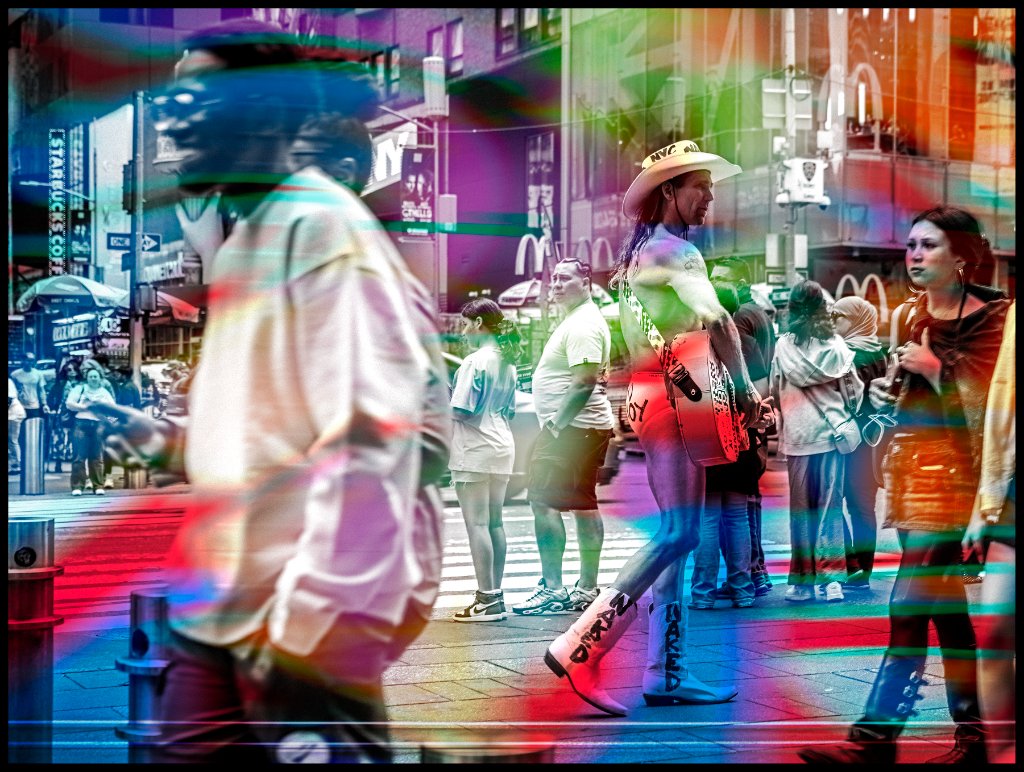
A cliché of spectacle dissolves into chromatic abstraction — identity and surveillance collapse in the neon theatre of Times Square. The performer becomes symbol, the symbol becomes critique.
Naked Cowboy, Times Square
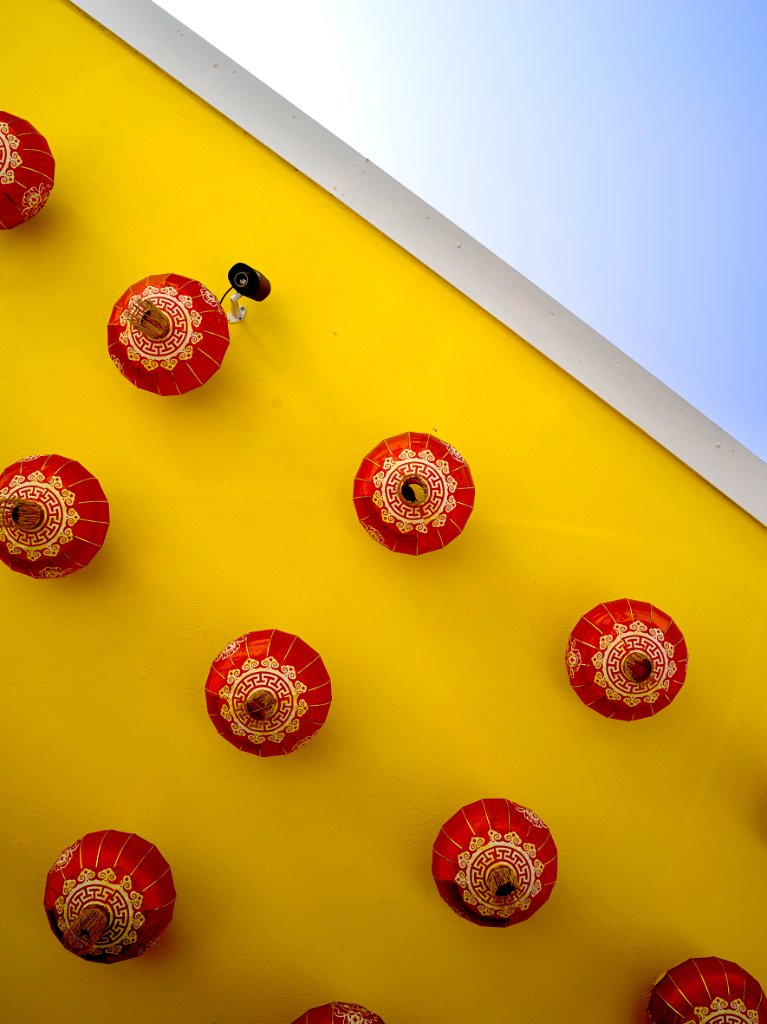
In Chinatown, the immigrant city speaks in colour. Red lanterns burn against gold — memory, ceremony, and belonging suspended overhead. The diaspora makes the city its own.
Yellow Ceiling, Red Lanterns
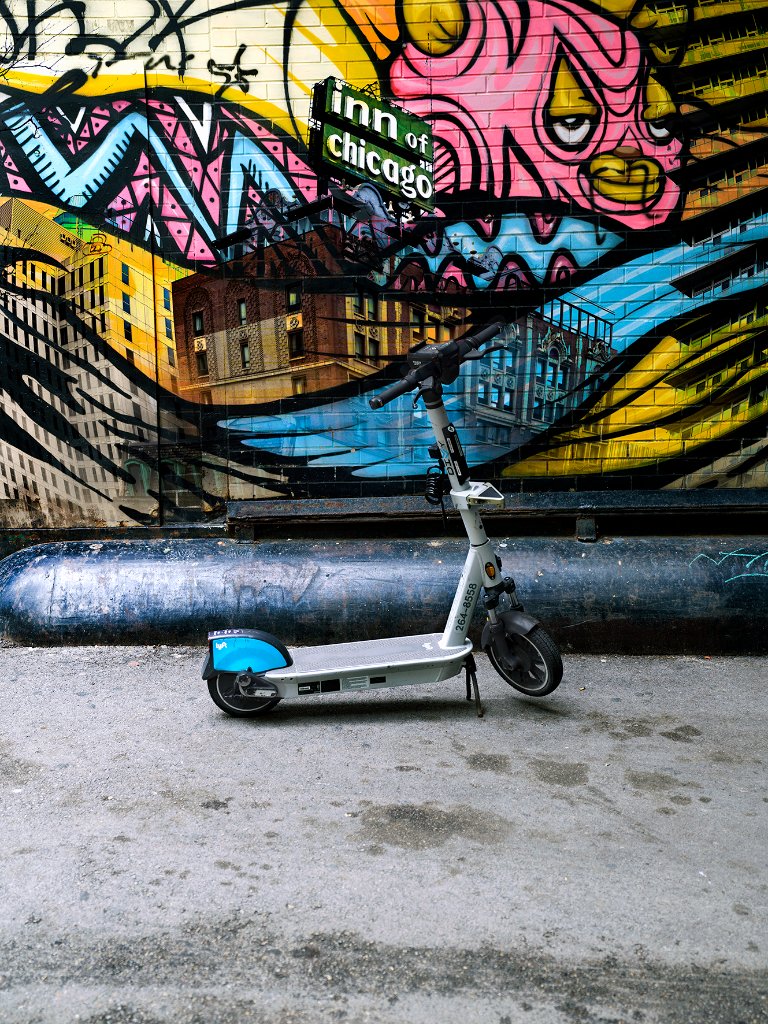
The scooter rests against Chicago's architectural backdrop — mobility as metaphor, the city as obstacle course. A quiet still life in the midst of urban velocity.
Scooter, Chicago
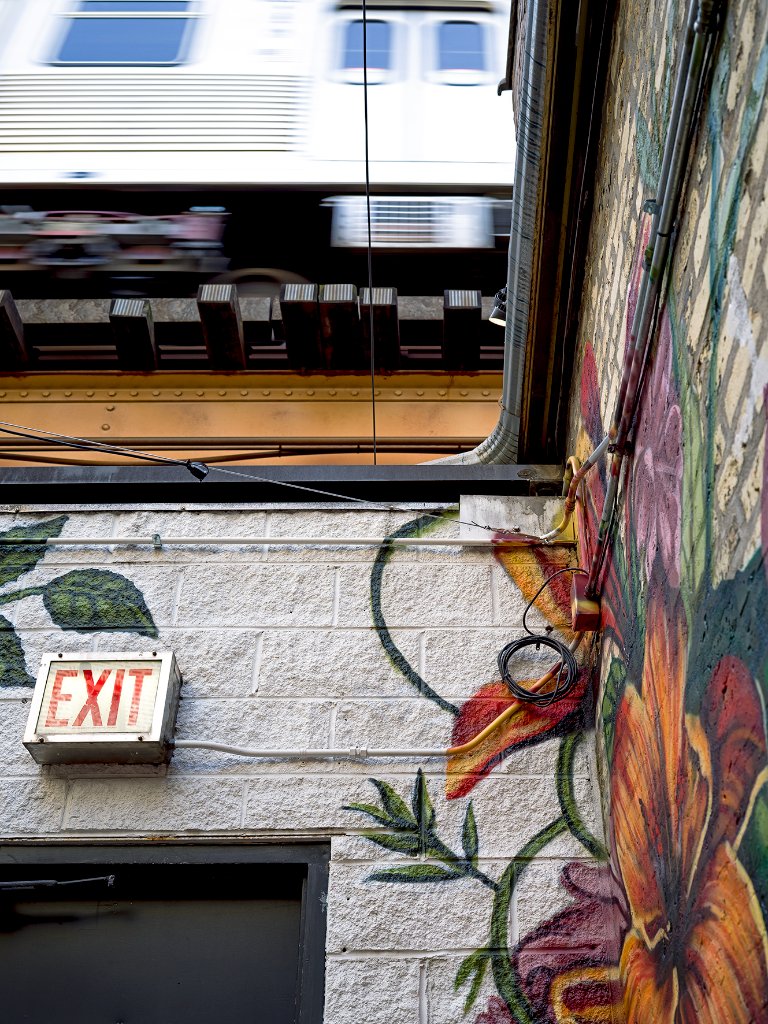
The exit sign — that most American of imperatives — glows red in the dark. Permission to leave, always available, always lit. A meditation on escape, on the threshold between inside and out.
Exit, Chicago
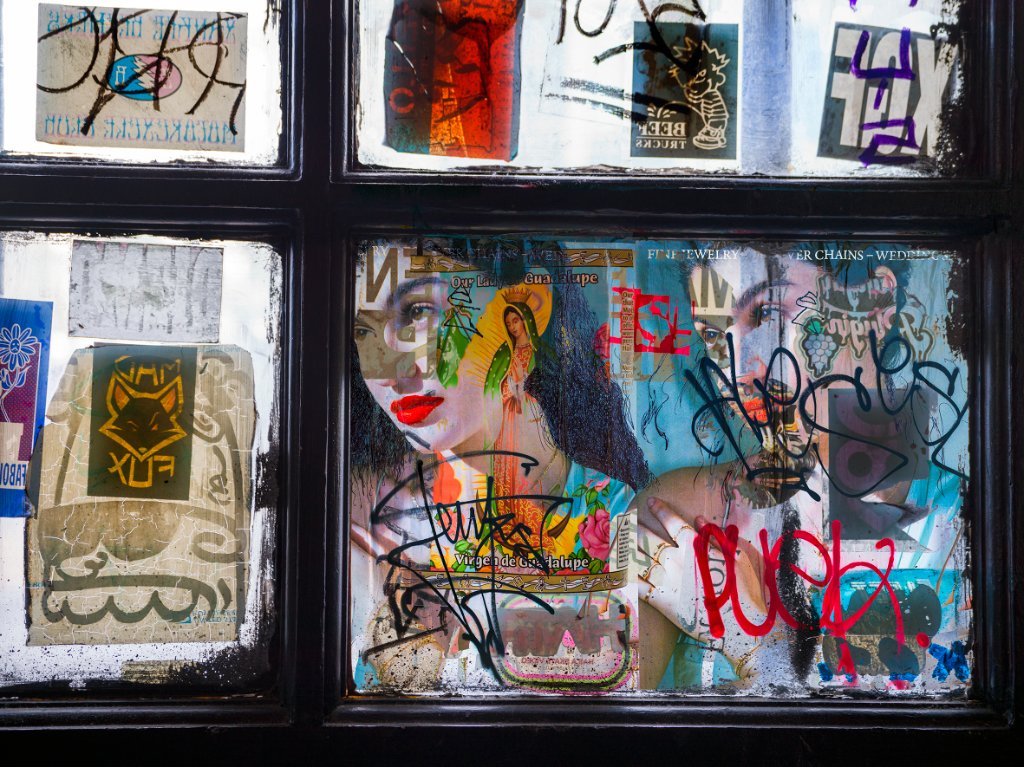
A figure framed by glass — observer and observed, interior and exterior collapsing into a single plane. The window as threshold, as mirror, as the city's most intimate portrait format.
Woman in Window, San Francisco
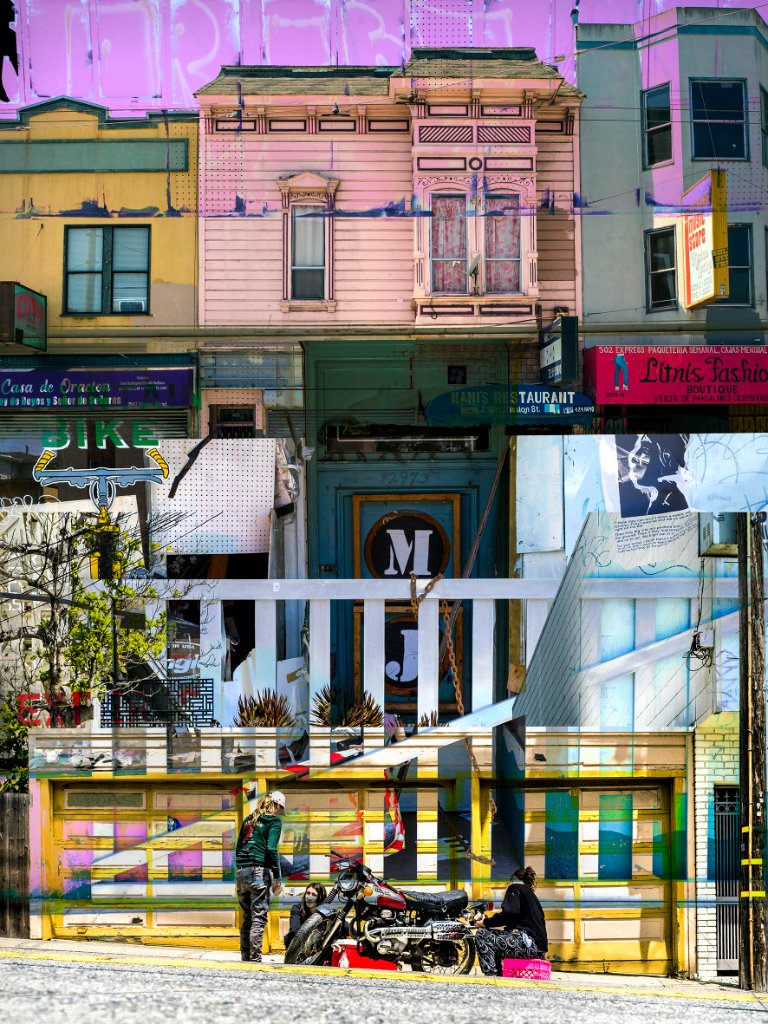
The repair shop as sanctuary — tools, grease, the patient work of maintenance. In a city of disruption and innovation, the bike shop holds its ground, offering the honest labour of fixing things.
Bike Service, San Francisco
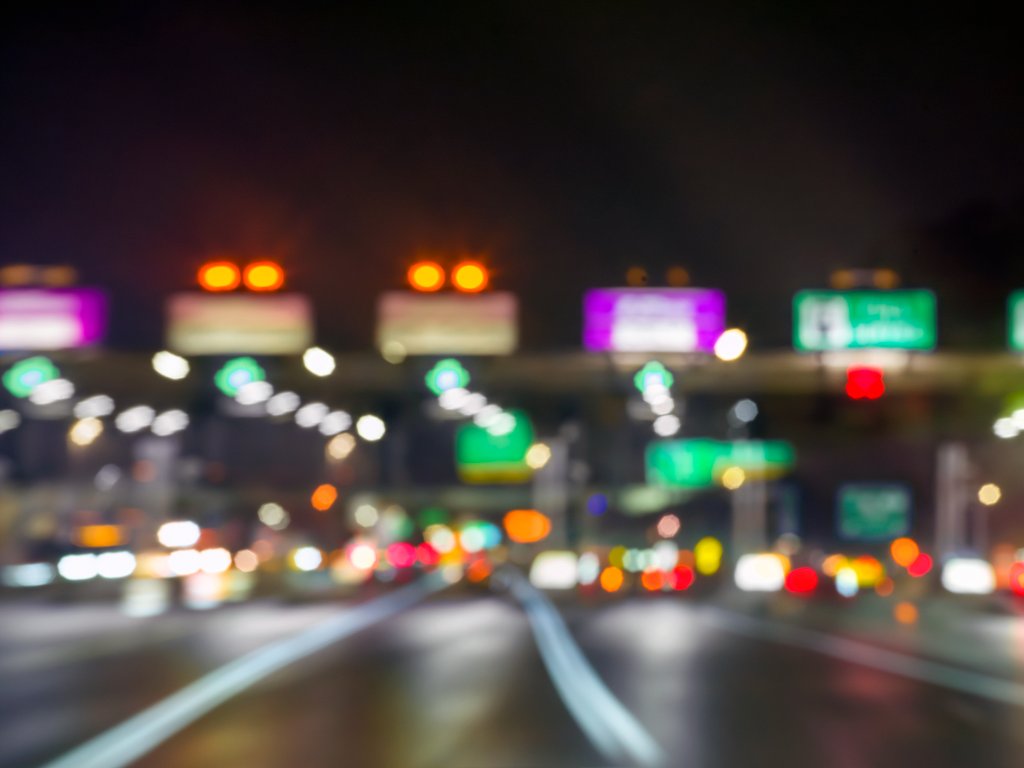
The toll plaza — infrastructure as portrait. Every crossing has its price; every threshold its guardian. The bay's great bridges reduce the monumental to routine.
Toll, San Francisco
Works from this exhibition available for acquisition
All photographs are available as limited edition prints. Contact the gallery for pricing, edition details, and provenance documentation.